
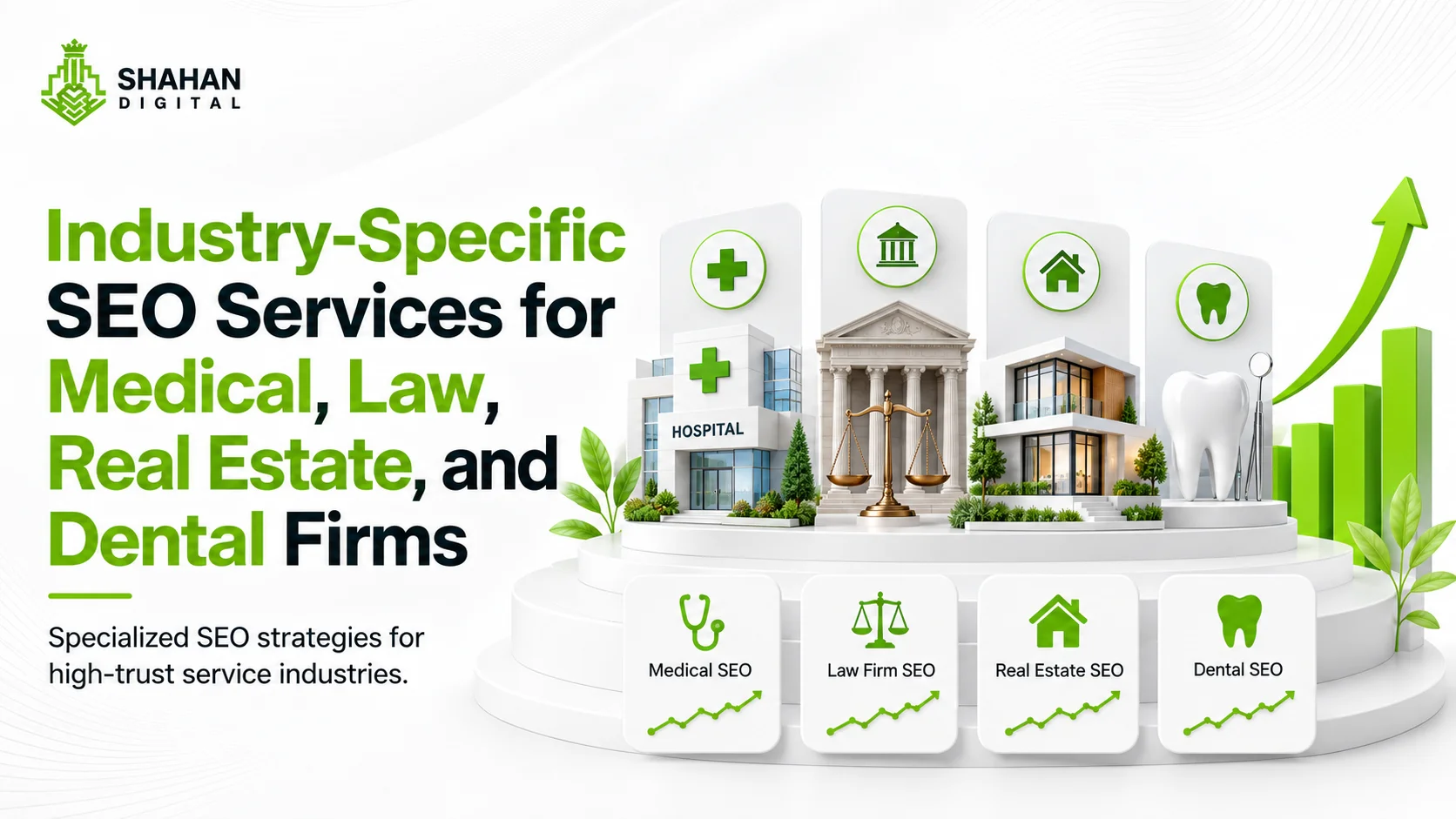
Industry-specific SEO is the difference between simply having a website and having a website that consistently attracts the right leads for your business. Whether you operate a clinic, law practice, real estate agency, hotel, or another specialized service company in {location}, your SEO strategy should reflect how your customers search, compare providers, and make decisions. At Shahan Digital, this means building search campaigns around your market, your services, and the local intent that drives real enquiries, not generic traffic.
For businesses in competitive industries, a broad SEO approach often falls short. A dental clinic may need visibility for “emergency dentist,” “teeth whitening,” and “Invisalign,” while a law firm might need to rank for practice-area pages, location pages, and high-intent search terms such as “family lawyer near me.” A real estate company may need strong property-intent landing pages, while professional service providers often need authority content that builds trust before the first consultation. Industry-specific SEO addresses these differences with a tailored strategy that aligns search demand with business goals.
Industry-Specific SEO in {location}
Industry-specific SEO is a tailored search strategy built around the unique services, customer behavior, competition, and conversion patterns of a particular sector. Instead of trying to rank a business for broad, generic keywords, it focuses on the terms, pages, and search intent most likely to generate qualified leads.
In {location}, this matters even more because many industries compete in tightly defined local markets. A clinic may compete against multiple providers within a few kilometers. A law firm may face national brands, long-established practices, and paid ads on the same search results page. A property business may need visibility across buyer, seller, landlord, and tenant search journeys. Effective SEO in these environments requires more than blog content. It requires a structured plan that includes keyword targeting, technical optimization, content strategy, local signals, and conversion-focused page design.
Shahan Digital supports this approach by aligning SEO with business model and industry intent. You can learn more about the agency’s digital services at shahandigital, where the focus is on building practical marketing systems that suit the market rather than applying a one-size-fits-all template.
Why generic SEO is not enough for specialized businesses
Generic SEO usually targets broad visibility, but specialized businesses need qualified visibility. Ranking for a high-volume keyword that does not match your service offering or client profile may generate traffic without generating revenue.
For example, a dental clinic does not benefit much from traffic searching for general health advice if those visitors are not looking for treatment. A law firm may attract clicks from informational searches but fail to convert if the content does not reflect the legal services offered. A real estate company may rank for broad property-related keywords but still miss buyers who are searching by neighborhood, property type, or budget.
Industry-specific SEO solves this by focusing on the search patterns that matter most to your business:
- Service-specific keywords
- Local and location-based searches
- High-intent transactional searches
- Practice-area or category pages
- Trust-building content
- Conversion-oriented landing pages
- Industry-relevant technical improvements
This approach is especially important for medical SEO services, law firm SEO, real estate SEO expert support, dentist SEO, and professional services SEO, where user trust and decision-making are strongly influenced by expertise, visibility, and perceived credibility.
What industry-specific SEO includes
Industry-specific SEO is not one tactic. It is a coordinated service that shapes how your business appears in search and how effectively that traffic turns into inquiries.
Keyword research built around real search intent
The foundation is keyword research, but not just for search volume. The real objective is to identify terms that reflect actual buyer intent. A clinic, for example, may need pages for treatments, symptoms, emergency services, and local practice areas. A law firm may need pages for each practice area and supporting questions that potential clients ask before contacting an attorney.
A strong keyword plan typically includes:
- Primary service keywords
- Location-modified keywords
- Long-tail questions
- “Near me” searches
- Comparison searches
- Problem-based searches
- High-conversion service queries
This is where a specialized team such as Shahan Digital can be valuable, because keyword targeting should reflect the realities of your industry, not just the output of a keyword tool.
Competitor analysis in your specific market
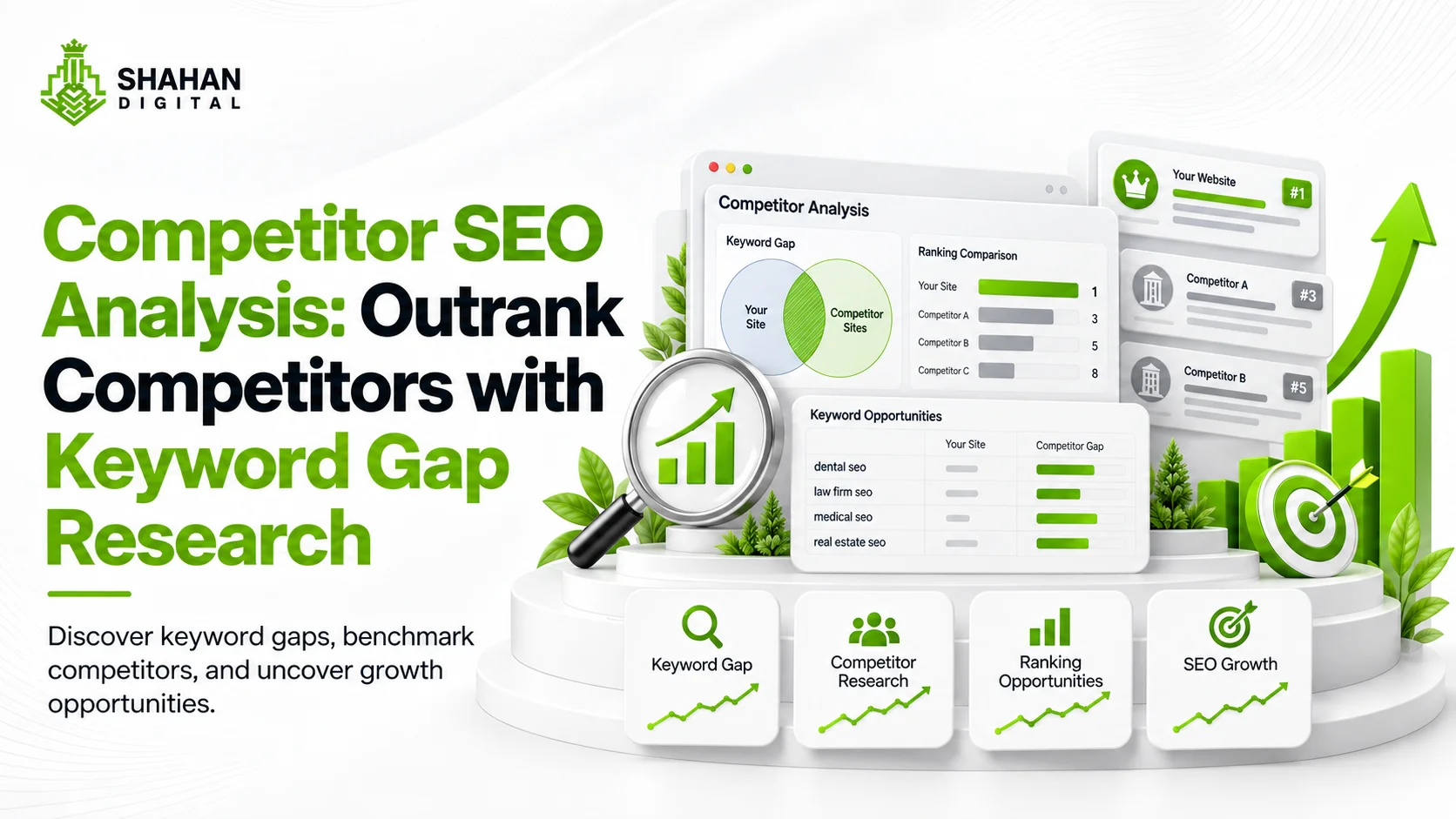
Competitor analysis for industry-specific SEO looks at more than who ranks first. It examines how competitors structure their service pages, what topics they cover, how they build authority, and how they convert visitors into leads.
For example:
- A dental website may outperform others by offering detailed treatment pages, before-and-after gallery support, and local trust signals.
- A law firm may rank better when it combines practice-area pages with strong author bios and FAQ content.
- A property business may win more traffic through neighborhood pages and listing-specific search optimization.
- A professional services firm may benefit from detailed case-study-style content and expert-led service pages.
Understanding competitor strategy helps define where your site can be stronger, more useful, and more relevant.
Technical SEO for service websites
Technical SEO supports the visibility and usability of your site. For industry-specific sites, this often includes site structure, page speed, crawlability, indexing, mobile usability, schema markup, and internal linking.
Typical technical priorities include:
- Clear service and location architecture
- Fast loading pages
- Mobile-first design
- Proper use of schema for services, reviews, FAQs, and local business details
- Indexation control for thin or duplicate pages
- Secure and accessible website structure
- Internal links that guide users from informational pages to service pages
For businesses with multiple services or multiple locations, technical SEO is especially important because search engines need to understand which page should rank for which query.
How industry-specific SEO works for different sectors
Every industry has different search behavior, content needs, and conversion triggers. A good strategy reflects those differences instead of forcing one template across all businesses.
Medical SEO services
Medical SEO services are focused on helping clinics, medical centers, and specialist providers attract patients searching for treatments, symptoms, and nearby care. In healthcare, trust is critical, so content quality, clear service pages, and credibility signals matter as much as keyword targeting.
A medical website often needs:
- Treatment pages for high-intent services
- Location pages for nearby searches
- Doctor or specialist profile pages
- Symptom-based pages that connect concerns to services
- FAQ sections that address patient questions
- Schema for medical services and local business data
For example, a clinic in {location} offering dermatology, pediatrics, and diagnostics may need separate pages for each specialty, plus supporting content for common patient concerns. This approach improves relevance and helps users find the exact service they need.
Dentist SEO
Dentist SEO usually combines local search optimization with treatment-specific pages. Patients often search by procedure, urgency, and proximity. That means a dental practice needs visibility for terms like dental implants, veneers, root canal, emergency dentist, and cosmetic dentistry, along with neighborhood or city-based terms.
A dental SEO strategy may include:
- Dedicated pages for each treatment
- Emergency service landing pages
- Service-area optimization
- Google Business Profile support
- Review strategy guidance
- Appointment-focused calls to action
A clinic may also benefit from content that explains procedure timelines, recovery expectations, and who is a good candidate. This helps convert anxious or comparison-shopping users into booked consultations.
Law firm SEO
Law firm SEO is highly competitive because legal search intent is often urgent and commercial. Users may be looking for representation immediately, or they may be comparing firms for a specific case type. Ranking well requires practice-area depth, local authority, and trust-focused content.
A law firm SEO plan often includes:
- Practice-area landing pages
- Location pages
- Attorney profile optimization
- FAQ content for legal questions
- Case-type educational content
- Internal linking between related legal topics
For example, a family law practice may target divorce, child custody, alimony, and mediation searches separately. A criminal defense firm may need pages for DUI, bail, and specific offenses. This level of structure is essential for professional services SEO where expertise and clarity influence decisions.
Real estate SEO expert strategy
A real estate SEO expert approach is about matching property search intent with the right pages and content. Buyers, sellers, renters, and investors do not search in the same way, so real estate SEO must reflect those differences.
Effective real estate SEO may include:
- Area pages for neighborhoods and communities
- Property-type pages for apartments, villas, offices, or commercial units
- Buyer and seller guides
- Rental search landing pages
- Investment-oriented content
- Listing optimization and index management
A property agency in {location} may want to rank for searches such as “apartments for rent,” “commercial property for sale,” or “family homes in [area].” Without targeted pages, those opportunities can be missed.
Professional services SEO
Professional services SEO applies to firms such as consultants, accountants, architects, financial advisors, engineering companies, and B2B service providers. These businesses usually need authority, clarity, and proof of competence more than volume-driven content.
The strategy often emphasizes:
- Industry-specific service pages
- Trust-building about pages
- Thought leadership content
- Case-study style pages
- Solution-based keyword targeting
- Conversion pathways for consultation requests
This is where a careful, research-driven SEO model matters because clients in professional services usually take longer to evaluate providers and often compare expertise across several firms before making contact.
Local SEO and search intent in {location}
Local SEO is a major part of industry-specific SEO when your business serves customers in a defined geographic area. Even if you work across a wider market, many high-value searches still include location terms, neighborhood names, or “near me” intent.
A strong local strategy usually includes:
- Optimized Google Business Profile
- Accurate NAP consistency across listings
- Local landing pages
- Review generation support
- Location-specific content
- Local backlinks and citations
- Embedded maps and contact details where relevant
In {location}, this can be especially useful for clinics, law firms, agencies, and property businesses that depend on nearby customers and consultation requests. Local SEO helps your business appear not only in standard organic results but also in map packs and local search features that can drive high-quality traffic.
Content strategy for industry-specific SEO
Content is where many businesses either gain a competitive edge or fall behind. Industry-specific SEO content should answer the questions your audience is already asking and guide them toward taking action.
Useful content types include:
- Service pages
- Location pages
- FAQ pages
- Comparison pages
- Treatment or service explainer pages
- Industry guides
- Case-study style pages
- Blog content tied to actual client concerns
The best content is not written to fill space. It is written to serve intent. For example:
- A dental clinic might create a page explaining the difference between crowns and veneers.
- A law firm might publish a guide on what to do after receiving a legal notice.
- A real estate business might create a neighborhood guide for buyers moving into a specific area.
- A consultant might explain how to choose the right service package for a business size or budget.
Shahan Digital’s approach, as seen through shahandigital, is to make content part of the lead-generation system rather than treating it as isolated blog publishing.
Conversion optimization for service pages
Traffic alone does not make SEO successful. A service page should help visitors understand what you offer, why it matters, and how to contact you.
High-performing service pages usually include:
- Clear service summaries
- Strong headings and scannable sections
- Trust signals such as qualifications, experience, or industry focus
- FAQ blocks
- Relevant calls to action
- Contact forms or booking options
- Internal links to related services
For example, a law firm page may need a consultation button above the fold and a simple explanation of next steps. A medical page may need reassurance, treatment details, and accessible contact information. A real estate page may need inquiry forms linked to specific listings or areas.
Good SEO content should reduce friction, not add it.
What affects results and timelines
Industry-specific SEO results depend on several factors, and it is important to be realistic. No provider can honestly guarantee rankings or outcomes because search performance depends on competition, website condition, content quality, authority, technical setup, and how consistently the strategy is implemented.
Common factors affecting results include:
- How competitive the industry is
- The current state of the website
- Existing content quality
- Domain authority and backlink profile
- Number of targeted services or locations
- Search demand in {location}
- Strength of local competitors
- Response speed to optimization changes
In many cases, early improvements can be seen within a few months, especially in technical fixes and long-tail keyword visibility. Competitive terms and larger markets often take longer. Businesses should think in terms of ongoing growth rather than instant ranking spikes.
Choosing the right SEO provider for your industry
The right provider should understand both SEO and your sector. A generalist may know how to optimize a website, but a specialist can better understand the way your customers search and what your pages need to convert.
When comparing providers, look for:
- Experience with similar industries
- Clear strategy and reporting
- Understanding of local search
- Content planning capability
- Technical SEO competence
- Transparent communication
- Realistic expectations, not promises of guaranteed rankings
For businesses in specialized sectors, working with a team that understands industry-specific SEO can make planning easier and execution more effective. Shahan Digital is one example of a digital marketing team that can align SEO with the needs of service businesses, including medical, legal, real estate, and other professional services, without applying a generic template.
Cost of industry-specific SEO
SEO pricing varies widely because every project has different scope, competition, and content needs. A small local service site with a few pages will usually require less investment than a multi-location medical practice or a competitive law firm targeting several practice areas.
Factors that influence cost include:
- Number of services or practice areas
- Number of locations
- Content creation requirements
- Technical cleanup needed
- Link building or digital PR efforts
- Local SEO scope
- Competition level
Instead of focusing only on the monthly fee, businesses should evaluate what the service includes and whether it supports lead generation. In many industries, a tailored SEO strategy offers better long-term value than paying for a lower-cost approach that does not address the market properly.
Conclusion
Industry-specific SEO is essential for businesses that want to attract qualified leads instead of generic traffic. The right strategy reflects your industry, your location, your services, and the way customers actually search. For medical practices, law firms, real estate businesses, and other professional service providers in {location}, that means building SEO around intent, trust, and conversion—not just rankings.
A tailored approach can improve visibility, strengthen lead quality, and make your website far more useful to potential clients. If you are looking for a structured and practical SEO partner, Shahan Digital offers industry-aware digital marketing support through shahandigital, with strategies designed to fit the needs of specialized service businesses.
FAQs
How long does industry-specific SEO take to work?
It depends on competition, the current website, and how much optimization is needed. Some businesses see initial movement within a few months, while competitive industries may take longer. SEO is usually a long-term growth channel rather than an instant result.
What does industry-specific SEO include?
It usually includes keyword research, competitor analysis, technical SEO, service page optimization, content strategy, local SEO, internal linking, and conversion-focused improvements. The exact mix depends on the industry and business model.
Is industry-specific SEO suitable for small businesses?
Yes. In many cases, small businesses benefit the most because a focused strategy can help them compete more effectively in a specific area or niche. A local clinic, law office, or property business can gain strong value from targeted visibility.
How is this different from regular SEO?
Regular SEO often takes a broad approach, while industry-specific SEO is built around the search behavior, services, and trust factors of a particular sector. This usually leads to more relevant traffic and better lead quality.
What factors affect SEO results the most?
Competition, content quality, website structure, authority, local presence, and the clarity of your service pages all matter. Search demand in your area and the strength of competitors also have a major impact.
Do I need local SEO if I already have a website?
If your business serves clients in a specific location, local SEO is usually important. It helps your business appear in map results, location searches, and queries that include nearby intent, which can be highly valuable for service providers.
How do I choose the right SEO provider?
Look for a provider that understands your industry, explains the strategy clearly, and focuses on realistic outcomes. You should also check whether they can support content, technical SEO, and local optimization as part of one coordinated plan.
Explore a complete SEO strategy
Industry-specific SEO works best when individual tactics support one coordinated growth plan. Businesses that need a broader foundation can explore SEO services for organic growth, while organizations that need strategic direction before implementation can use SEO consulting to clarify priorities and scope.
Authority development also extends beyond on-site optimization. A balanced strategy may include off-page SEO alongside improvements to the site itself, while businesses evaluating their progress can use a structured approach to measure SEO success against visibility, traffic, and business objectives.
The website itself also influences how effectively search traffic turns into enquiries. Businesses planning larger structural or user-experience improvements can explore web design, development, and SEO as a connected process rather than treating site design and search optimization separately. Companies that need dedicated specialist support can also hire an SEO expert for more focused execution.