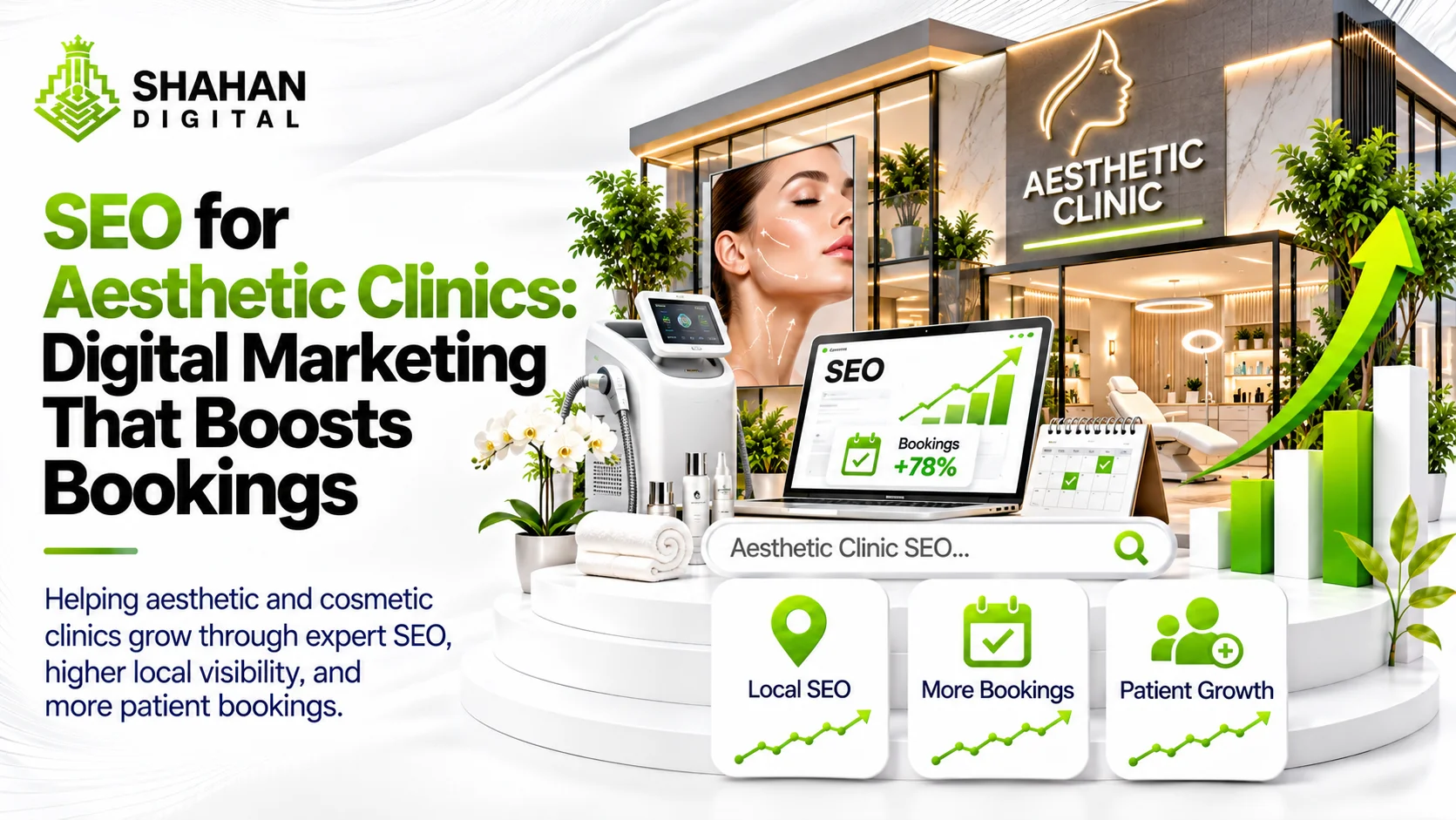
SEO for Aesthetic Clinics is one of the most effective ways to attract high-intent patients who are actively searching for cosmetic treatments, skin procedures, and minimally invasive enhancements online. For clinics competing in a crowded market, strong search visibility is not just about ranking for broad terms; it is about appearing for the exact services and locations that potential patients are looking for. A clinic that invests in strategic SEO can build trust, increase qualified enquiries, and reduce reliance on paid ads over time. If you are looking for a professional approach tailored to aesthetic practices, Shahan Digital can help implement a focused strategy through its services at Shahan Digital, with digital marketing support designed to align with patient intent, local competition, and conversion goals.
SEO for Aesthetic Clinics That Attracts the Right Patients
SEO for Aesthetic Clinics works best when it is built around the treatments patients search for, the location they want, and the trust signals that influence booking decisions. Unlike general service businesses, aesthetic clinics usually compete on reputation, visual proof, treatment depth, practitioner credibility, and convenience. That means the SEO strategy needs to go beyond simple keyword placement and instead support the entire patient journey from discovery to consultation booking.
Aesthetic patients often search in different ways depending on their intent. Some are ready to book a treatment such as Botox, dermal fillers, laser hair removal, or chemical peels. Others are still comparing providers, checking reviews, or looking for clinics near them. A high-performing SEO campaign should capture both types of search behavior with targeted landing pages, location signals, treatment-specific content, and technical optimisation.
For clinics in competitive markets, this often means a combination of local SEO, content development, conversion-focused web design, and ongoing authority building. Shahan Digital approaches this kind of work with a practical mindset, helping clinics structure their website and content so the right services are visible to the right audience at the right time.
Why Aesthetic Clinics Need Specialized SEO
Aesthetic clinics need specialized SEO because their services are highly visual, often premium-priced, and strongly influenced by trust and perceived expertise. Patients usually compare multiple providers before making a decision, and search results play a major role in which clinics get considered.
General SEO tactics are not enough for this industry. A clinic may rank for a broad term, but if the page does not clearly explain the treatment, showcase qualifications, and support booking intent, it is unlikely to generate quality enquiries. Specialized SEO for cosmetic clinics focuses on the treatment areas people actually search for, such as skin rejuvenation, anti-ageing treatments, non-surgical facials, acne scar treatment, body contouring, and injectables.
There is also a compliance and reputation element. Clinics must be careful with wording, claims, and patient expectations. Good SEO content for aesthetic services needs to be informative, accurate, and professionally written, rather than overly promotional. Search engines also reward content that appears credible, relevant, and useful to the user.
What SEO for Aesthetic Clinics Includes
SEO for aesthetic clinics is typically a combination of technical, content, local, and authority-building work. The exact mix depends on the clinic’s size, location, and service range, but most effective campaigns include the following:
Keyword research for treatment and location intent
Keyword research is the foundation of any campaign. For aesthetic clinics, this usually includes treatment keywords, problem-based searches, and local modifiers. Examples include searches for “Botox clinic near me,” “lip filler treatment in [location],” “laser hair removal clinic,” or “best skin clinic for acne scars.”
A good strategy maps these keywords to the most relevant pages on the website. For example, a clinic should not try to force every treatment keyword onto one page. Instead, each service should have its own dedicated page with relevant supporting content.
Location pages and local SEO
If the clinic serves a specific city, district, or neighbourhood, local SEO is essential. This includes optimising Google Business Profile, building location signals on the website, improving map visibility, and creating local landing pages where appropriate.
For clinics with multiple branches, each location should have a unique page with accurate contact details, directions, reviews, and treatment availability. This helps search engines understand the clinic’s service area and improves the chances of ranking for local searches.
Service page optimisation
Each major treatment should have its own page. These pages should explain the treatment, who it is suitable for, what results may look like, what recovery may involve, and why the clinic is a good choice. Strong service pages also include FAQs, internal links, booking prompts, and trust elements such as practitioner profiles and clinic credentials.
Technical SEO
Technical SEO matters because even a well-written website will struggle if it loads slowly, has indexing issues, or presents a poor mobile experience. For aesthetic clinics, common technical priorities include page speed, mobile usability, structured data, clean site architecture, crawlability, and proper metadata.
Content marketing
Content helps clinics rank for a wider set of questions and comparison searches. This might include articles on treatment preparation, aftercare, differences between procedures, suitability by skin type, and seasonal treatment advice. Content should support the patient journey rather than simply attract generic traffic.
Conversion optimisation
Getting traffic is only part of the goal. Aesthetic clinic websites must also convert visitors into calls, form submissions, or bookings. Clear calls to action, visible contact details, strong treatment pages, trust indicators, and easy navigation all improve conversion rates.
SEO Strategy for Aesthetic Clinics in {location}
For clinics targeting {location}, SEO should reflect the local market, search habits, and competitive density in that area. In a location-based market, many patients will search with both treatment and geographic intent. That means pages need to be built around local terms naturally, not forced into copy.
A practical local SEO strategy for an aesthetic clinic in {location} usually includes:
- Optimising the home page and key service pages for local relevance
- Creating or improving Google Business Profile signals
- Building consistent business information across directories
- Using location terms in page titles, headings, metadata, and content where appropriate
- Adding location-specific FAQs and contact details
- Encouraging authentic patient reviews
- Publishing local content that reflects the area’s patient interests and search trends
If the local market is competitive, the clinic may need supporting content that targets nearby areas or treatment-specific searches. For example, a clinic could create separate pages for Botox, skin tightening, filler treatments, and laser services, each tailored to the patient’s likely search intent in {location}. This is especially useful for clinics that want to appear for both generic local terms and specific procedure-based queries.
Shahan Digital can support this type of location-led strategy by aligning local SEO, content structure, and on-page optimisation around the services most likely to drive consultations.
Digital Marketing for Aesthetic Clinics and SEO Integration
Digital Marketing for Aesthetic Clinics works best when SEO is connected to the clinic’s broader lead generation system. Search visibility should not exist in isolation. It should support paid advertising, social media, email follow-up, and patient retention.
For example, a clinic may use SEO to rank for evergreen treatment searches while using paid campaigns to promote seasonal offers or new services. Social content may build brand recognition, while SEO captures users who are already actively looking for treatment options. This kind of integrated approach usually produces more stable long-term growth than relying on a single channel.
SEO also supports brand authority. A clinic that appears consistently across treatment pages, local searches, and helpful informational content is more likely to be trusted by patients comparing providers. This matters especially for procedures where patients want reassurance about safety, skill, and expected outcomes.
SEO for Cosmetic Clinics: What Makes It Different
SEO for Cosmetic Clinics has some differences compared with other service industries because the user journey is more sensitive and decision-heavy. Patients are often looking for aesthetic improvement, but they also want reassurance, privacy, professionalism, and visible results. That changes both content strategy and website structure.
A cosmetic clinic website should generally include:
- Clear treatment explanations
- Before-and-after galleries where appropriate and compliant
- Practitioner qualifications and bios
- Safety and consultation information
- Honest expectations around results and recovery
- Treatment-specific FAQs
- Easy ways to contact the clinic
Search engines also evaluate topical relevance. If a clinic offers multiple cosmetic services, each one should be supported by dedicated content. A single thin page for all treatments is unlikely to compete well against more authoritative clinic websites. Instead, a structured site with individual service pages, internal links, and supporting articles is usually more effective.
Choosing Keywords That Match Patient Intent
Choosing the right keywords is one of the most important parts of SEO for aesthetic clinics. Some keywords attract patients who are close to booking, while others are better for early-stage education. A strong strategy uses both.
High-intent keywords may include:
- “Botox clinic in {location}”
- “Dermal fillers near me”
- “Laser hair removal clinic”
- “Aesthetic clinic consultation”
- “Skin rejuvenation treatment”
Informational and comparison keywords may include:
- “How long do fillers last”
- “Best treatment for acne scars”
- “Botox vs fillers”
- “What to expect after laser treatment”
- “Is chemical peel safe for sensitive skin”
These searches can be grouped into content clusters so the clinic appears helpful at each stage of the decision-making process. This also improves internal linking and supports the authority of the main service pages.
Website Content That Converts Visitors Into Consultations
The best aesthetic clinic websites do more than describe services. They answer the questions that patients are already asking and remove hesitation before the booking step.
Effective service page content usually includes:
Treatment overview
A simple explanation of what the treatment is and what it is designed to do. This should be clear, medically cautious, and understandable to non-specialists.
Ideal candidate information
Patients want to know whether a treatment is suitable for their skin type, age range, concerns, or goals. Explaining this helps qualify leads.
Process and aftercare
Outlining what happens during the appointment and what to expect after treatment improves trust and reduces uncertainty.
Results and timeline
Patients often want to know when results may appear and how long they may last. This should be phrased responsibly and without exaggerated claims.
FAQs and booking support
A good FAQ section can capture additional search traffic and answer last-mile questions that affect conversions.
Shahan Digital often structures clinic pages with this conversion logic in mind, ensuring that SEO and user experience support the same goal: more qualified enquiries from people ready to take the next step.
Local SEO Signals That Matter Most for Clinics
Local SEO is especially important for aesthetic clinics because many patients choose providers based on proximity and convenience. When someone is searching for a clinic, they often want a location that is easy to access and a provider they can trust quickly.
Important local SEO signals include:
- A fully optimised Google Business Profile
- Accurate name, address, and phone number details
- Location pages with embedded maps and directions
- Local reviews and reputation management
- Service relevance on the website
- Local backlinks and citations where appropriate
- Mobile-friendly design and fast loading speed
It is also useful to align local content with nearby search behaviour. For example, patients may search for treatment types alongside neighbourhood names, landmarks, or city districts. A clinic that understands these patterns can structure its pages more effectively and capture more relevant traffic.
How SEO Supports High-Value Aesthetic Treatments
Some aesthetic treatments have higher search value than others because they tend to involve larger booking decisions, repeat visits, or premium pricing. Examples often include injectables, advanced skin treatments, laser procedures, and body contouring services.
SEO can support these treatments by:
- Building dedicated landing pages for each major service
- Using education-based content to reduce hesitation
- Showing qualifications and safety information
- Highlighting realistic outcomes
- Answering cost, recovery, and suitability questions
For higher-value services, the website must work harder to establish credibility. Patients may not book immediately after their first visit, but SEO can keep the clinic visible throughout their research process.
Common Mistakes Clinics Make With SEO
Many aesthetic clinics invest in websites but do not get meaningful search results because of a few common issues.
Thin or duplicated service pages
Pages that are too short or too generic often fail to rank. Each treatment page should contain unique, useful content.
Weak local signals
If the clinic does not clearly communicate where it is located or who it serves, local rankings are often limited.
Overuse of promotional language
Overstated claims can reduce trust. Patients usually respond better to expert, informative language.
Ignoring mobile users
Many patients search on mobile devices, so a poor mobile experience can hurt both rankings and bookings.
Lack of internal linking
If pages are not connected logically, search engines may struggle to understand the website structure.
No content strategy
Relying only on service pages limits the clinic’s reach. Supporting content helps capture broader search demand.
How to Choose the Right SEO Partner for an Aesthetic Clinic
Choosing the right provider matters because aesthetic clinic SEO requires both technical skill and industry awareness. A provider should understand how to market cosmetic and skin treatments without crossing compliance boundaries or using overly aggressive tactics.
When comparing providers, look for:
- Experience with service-based healthcare or aesthetic websites
- Ability to build local and treatment-focused SEO strategies
- Clear reporting and measurable goals
- Content quality and website structure expertise
- Understanding of conversions, not just rankings
- A realistic approach to timelines and outcomes
A team such as Shahan Digital can be a practical choice for clinics that need strategic support across content, local visibility, and lead generation. The value is not just in ranking pages, but in building a search presence that supports consultations and long-term brand trust.
What Results to Expect and What Affects Them
SEO results for aesthetic clinics depend on multiple factors, including competition, website quality, location size, content depth, domain authority, and how consistently the work is implemented. Clinics in major cities may face more competition and require a stronger long-term approach, while smaller markets may see faster visibility gains.
Typical influences on performance include:
- How established the website already is
- Whether service pages are well structured
- The strength of the clinic’s local reputation
- The number of competing clinics in the area
- How much content has been published
- The quality of backlinks and citations
- Whether the website is technically sound
SEO is usually a medium- to long-term service. Early improvements may appear within a few months, but stronger growth often takes longer, especially in competitive cosmetic markets. The goal is not just quick rankings, but sustained visibility that turns into dependable enquiries.
Why Content Quality Matters in Cosmetic and Aesthetic Search
Patients searching for aesthetic treatments are often cautious. They want accurate information, a professional tone, and reassurance that they are dealing with a credible provider. That makes content quality especially important.
Good content should be:
- Accurate and easy to understand
- Professionally written
- Relevant to the treatment and location
- Helpful without being overly clinical
- Structured with headings, FAQs, and clear calls to action
This is where the right digital marketing partner can make a real difference. Shahan Digital can help aesthetic clinics shape content that supports both search performance and patient confidence, which is essential for service-driven websites in this sector.
Conclusion
SEO for Aesthetic Clinics is most effective when it is built around patient intent, local visibility, and trust. Clinics need more than generic rankings; they need a structured strategy that connects treatment pages, local search, content, and conversion optimisation. When done well, SEO can help cosmetic and skin clinics attract qualified enquiries and build a stronger online presence over time. For clinics that want a professional, service-led approach, Shahan Digital offers tailored support that aligns digital marketing with the realities of the aesthetic industry and the needs of the local market.
FAQ
How much does SEO for aesthetic clinics usually cost?
The cost depends on the size of the website, the number of treatments being targeted, the competitiveness of the location, and the level of ongoing work required. Smaller clinics with a focused service area may need a lighter package, while multi-location or high-competition clinics usually require a more comprehensive strategy.
How long does SEO take to show results for an aesthetic clinic?
Timelines vary, but SEO usually takes several months to build momentum. Some improvements, such as better indexing or stronger local visibility, may appear earlier, while more competitive keyword rankings generally take longer. Results depend on the clinic’s starting point and the quality of implementation.
What does SEO for aesthetic clinics include?
It typically includes keyword research, service page optimisation, local SEO, technical improvements, content creation, internal linking, review support, and conversion-focused website updates. For many clinics, it also includes Google Business Profile management and location-based targeting.
Is SEO suitable for small aesthetic clinics?
Yes. In fact, small clinics can benefit greatly from SEO because it helps them compete for local searches without relying only on paid ads. A focused strategy can help a smaller clinic rank for specific treatments and nearby location terms.
What factors affect SEO results for cosmetic clinics?
The main factors include competition, website quality, location, treatment demand, content depth, technical health, authority, and consistency of optimisation. A clinic in a highly competitive city may need more time and a stronger strategy than a clinic in a smaller market.
Should an aesthetic clinic focus more on local SEO or content marketing?
Usually both are important. Local SEO helps the clinic appear in nearby searches and map results, while content marketing helps target treatment questions and comparison searches. The best approach combines both so the clinic is visible at multiple stages of the patient journey.
How do I choose an SEO provider for an aesthetic clinic?
Look for a provider with experience in service-based healthcare or cosmetic businesses, a clear strategy for local and treatment-based visibility, and a realistic approach to results. It also helps if the provider understands patient intent, compliance-sensitive content, and conversion optimisation.